
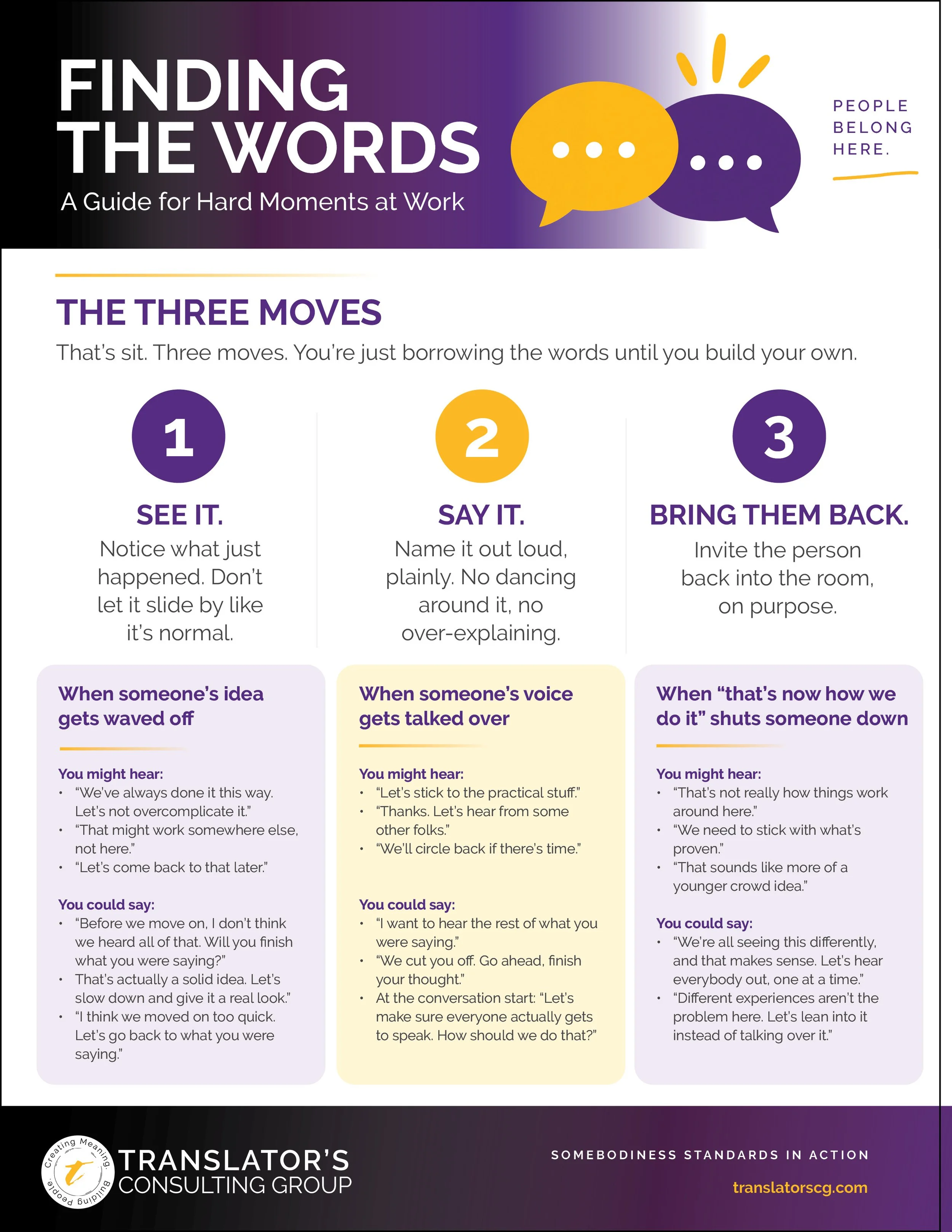
Finding the Words
A Guide for Hard Moments at Work
Every workplace has moments where somebody gets talked over, brushed off, or made to feel small. You don't need the perfect words. You need enough words ready that you don't freeze, walk away, or make it worse. That's what this is for.
Want a quick reference to keep close?
Download the three moves and all three scenarios as a printable PDF.
HOW TO USE THIS
An effective communicator doesn't just react well. They prepare well. Somebodiness isn't something that happens to you. It's something you practice, on purpose.
Prepare ahead
Before a one-on-one — decide how you'll name what needs naming, instead of hoping it comes up naturally.
Walking into a team meeting — know your opening line before the tension shows up.
Addressing a pattern with an employee — plan a real conversation instead of letting it slide again.
In the moment
When something happens right in front of you and you need words fast, borrow the ones below until you build your own.
An effective communicator doesn't just react well. They prepare well.
Somebodiness isn't something that happens to you. It's something you practice, on purpose.

THE THREE MOVES

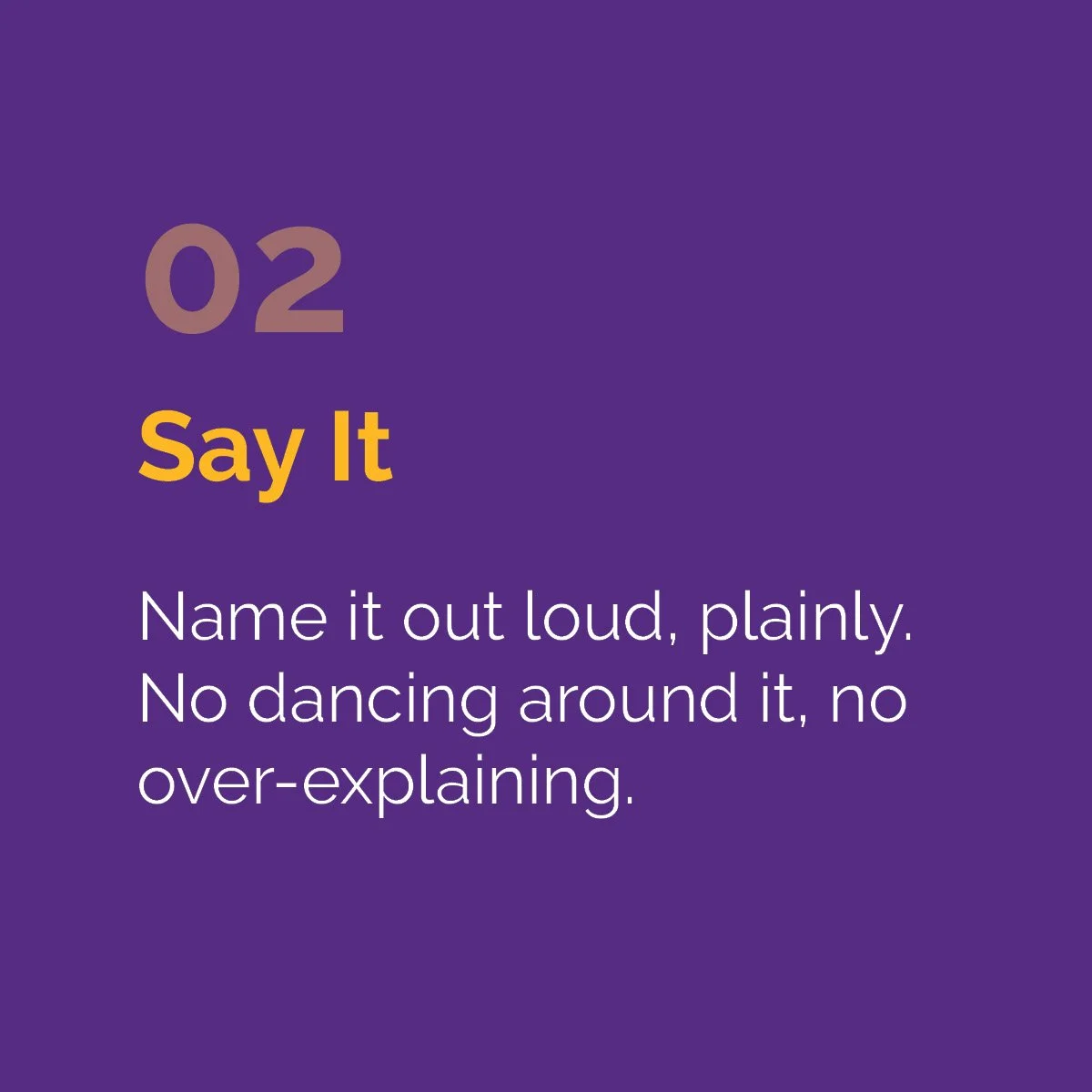
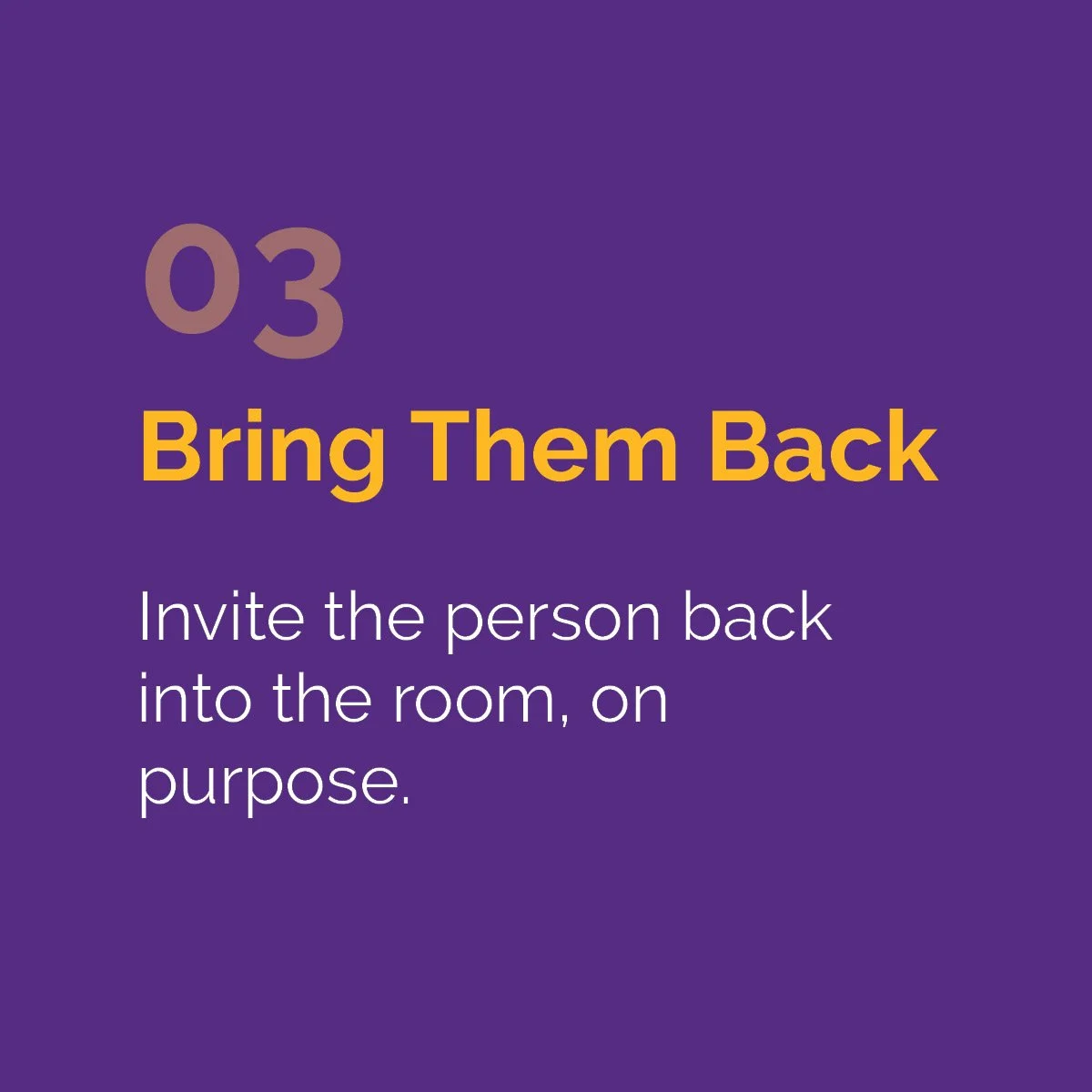
That's it. Three moves. You'll see these three moves in every example below. You're just borrowing the words until you build your own.

THREE SCENARIOS
-
You might hear:
“We've always done it this way. Let's not overcomplicate it.”
“That might work somewhere else, not here.”
“Let's come back to that later.”
You could say:
“Before we move on, I don't think we heard all of that. Will you finish what you were saying?”
That's actually a solid idea. Let's slow down and give it a real look."
“I think we moved on too quick. Let's go back to what you were saying.”
-
You might hear:
“Let's stick to the practical stuff.”
“Thanks. Let's hear from some other folks.”
“We'll circle back if there's time.”
You could say:
“I want to hear the rest of what you were saying.”
“We cut you off. Go ahead, finish your thought.”
At the conversation start: “Let's make sure everyone actually gets to speak. How should we do that?”
-
You might hear:
“That's not really how things work around here.”
“We need to stick with what's proven.”
“That sounds like more of a younger crowd idea.”
You could say:
“We're all seeing this differently, and that makes sense. Let's hear everybody out, one at a time.”
“Different experiences aren't the problem here. Let's lean into it instead of talking over it.”
Put it in your own words
None of these are lines to recite. They're permission. Permission to say something instead of nothing, and to trust that plain, honest words are enough. The goal was never a perfect script. It's making sure somebody stays somebody, even in the hard moment.
⚠️ Once you close this page, your responses will not be saved. Print your responses or save as a PDF before you leave.

© 2026 Translator's Consulting Group, LLC
"We incorporate someone into our circle by intentionally listening to them and genuinely understanding their words.”
Tim Terrentine — Founder and Chief Translator, Translator's Consulting Group
BEFORE YOU CLOSE THE BOOK

None of these are lines to recite. They're permission. Permission to say something instead of nothing, and to trust that plain, honest words are enough.
The goal was never a perfect script. It's making sure somebody stays somebody, even in the hard moment.

Listening Changes Everything
When people feel genuinely heard, something shifts — in trust, in culture, in what becomes possible together. That's Somebodiness in action. Contact us to discover how we can help your team practice exactly that.